continuing-course-logos

We are used to considering space as an infinite resource. We could not be more wrong. Decades of space exploration have led to tremendous technological progress, bringing crucial services, such as weather forecasting, climate monitoring, global positioning and communications, contributing to economic and social development globally. However, the rising number of satellites launches to already crowded orbits has amplified concerns about preserving the sustainability and safety of the space environment in the long-term. This situation could precipitate as a cascade of collisions would result in orbits being unusable for many generations, thus losing all the vital infrastructure providing services central to sustainable development and economic growth on earth. The goal of the course is to give the students a sense of what space sustainability means and how they can design, operate missions and how to manage space business with a sustainability perspective.

Objectives of the course

The experts will tackle the history of space sustainability and geopolitical challenges. Different tools and methods will be presented and then used in group works. On the last day, the concept of Environmental Social Governance (ESG) and Corporate Social Responsibility (CSR) will be presented. Throughout the 3-days the concepts covered are accompanied by  group work, in which the students will develop  a concept for a space mission, evaluating  the technical, economical, governance and geopolitical aspects of sustainability in space.

After completing the course, the participants will have a better understanding of the challenges of space sustainability, a concrete set of tools and methods on how to better measure, analyse and act towards more sustainable space missions. The three day course also allows having in-depth exchanges with experts.

Target Audience

Space stakeholders (engineers, scientists, non technical managers, policy practitioners, etc.) active in space agencies, aerospace industries or related fields and concerned about preserving the sustainability and safety of the space environment in the long-term.

The course will be given in English.

Organisation

  • EPFL Space Center (eSpace), EPFL (Swiss Federal Institute of Technology in Lausanne), Switzerland

In collaboration with:

  • Karman Project
  • European Space Agency (ESA)

Teaching approach

  • In-class teaching
  • Meeting with practitioners
  • Group Work

March 16 to 19, 2026

Registration deadline:
December 14, 2025

Campus UNIL-EPFL, Lausanne (Switzerland)

Participants should bring their own laptop (for hands-on experience).

CHF 2'400
10% discount for contributing members of EPFL Alumni & EPFL Partners

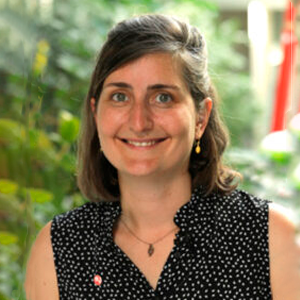
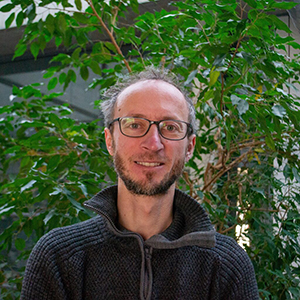
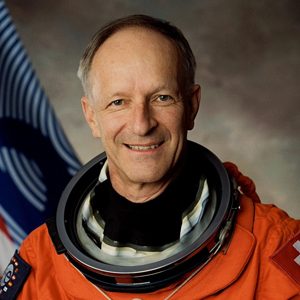
Our Teachers

poulet-david

Testimonial from a course participant

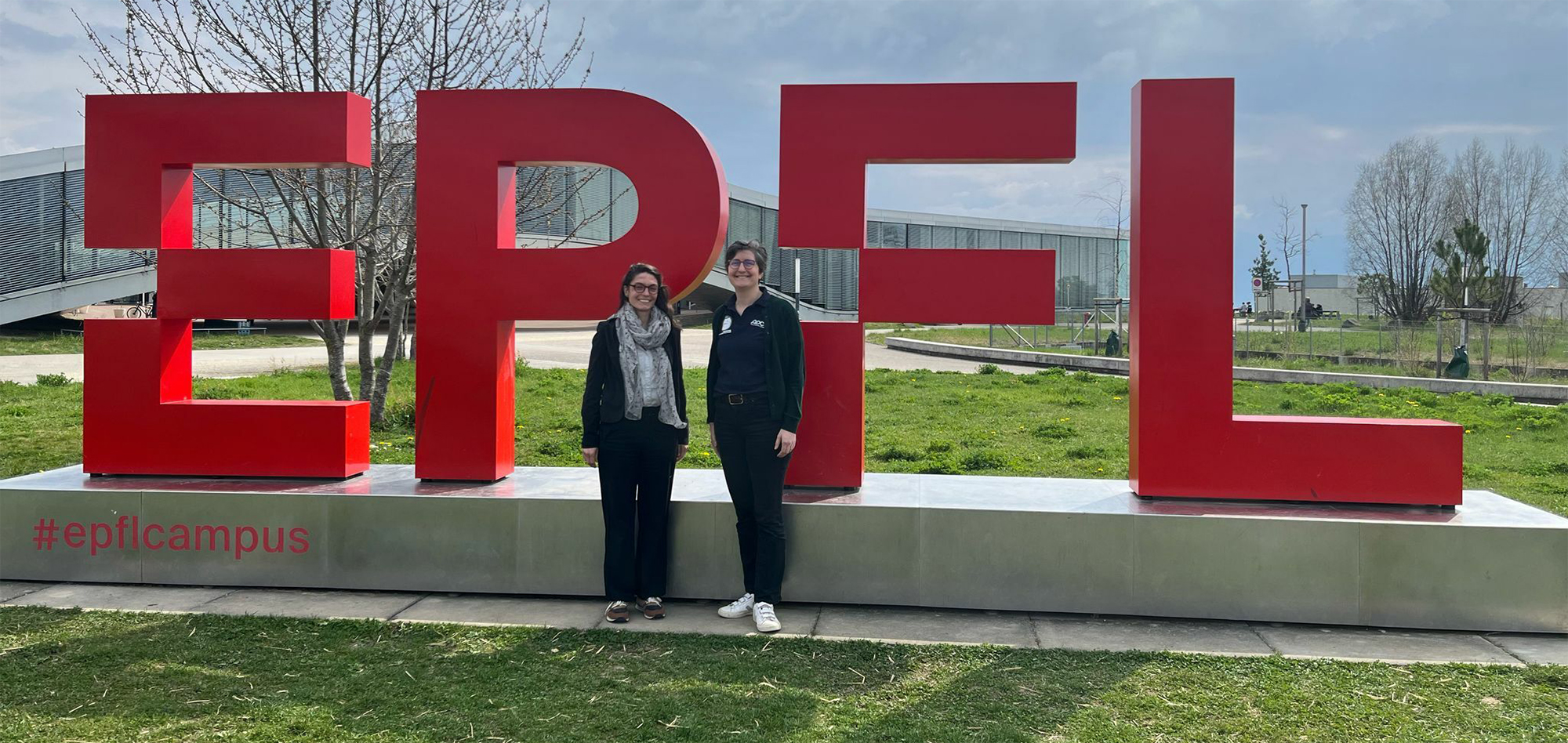
Lucie Poulet, a Karman Fellow, recently took part in the Space Sustainability course and came away inspired. Discover what she had to say about the experience.